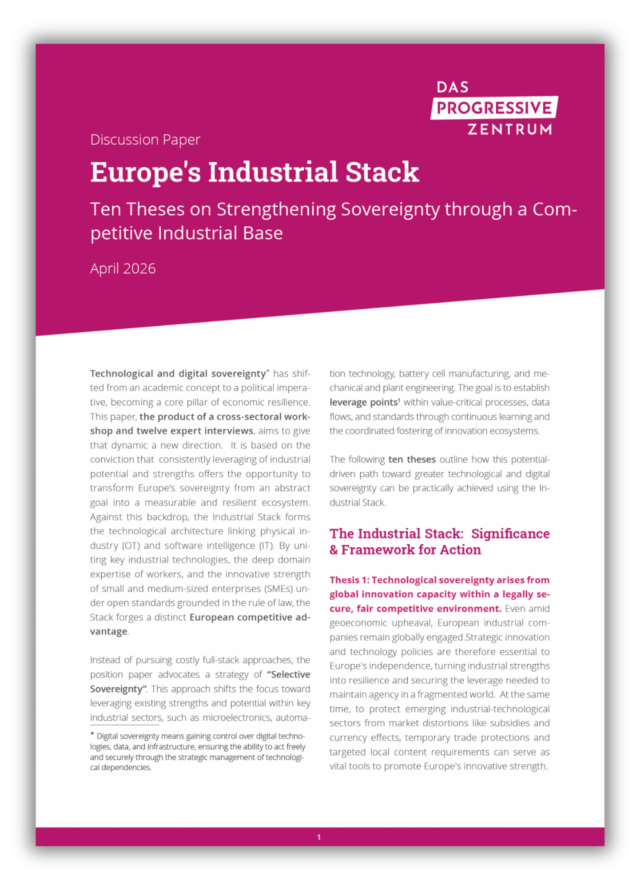
Europe’s Industrial Stack
Posted on
Ten Theses on Strengthening Sovereignty through a Competitive
Industrial Base
Ten Theses on Strengthening Sovereignty through a Competitive
Industrial Base
With official diplomatic ties at the national level strained by unprecedented geopolitical realignment, where does the future of the transatlantic partnership lie?
How can structural transformation in former industrial regions be managed in a way that fosters economic resilience, climate action, and democratic trust?
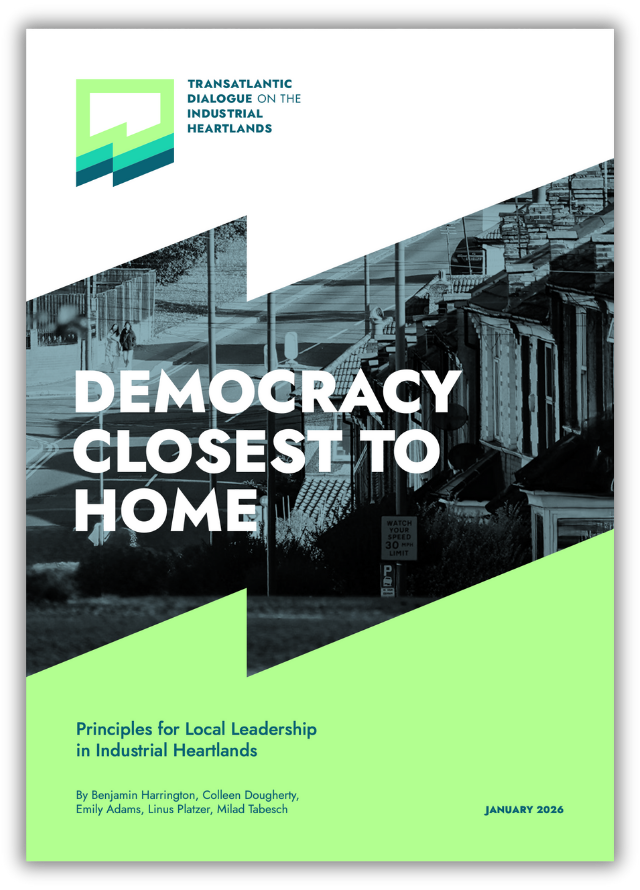
This paper highlights insights from our journey and proposes a set of principles for local leadership rooted in our experiences as a younger generation of transatlantic leaders navigating structural change. Our recommendations emphasise civic connection and identity, locally grounded communication, and visible delivery.
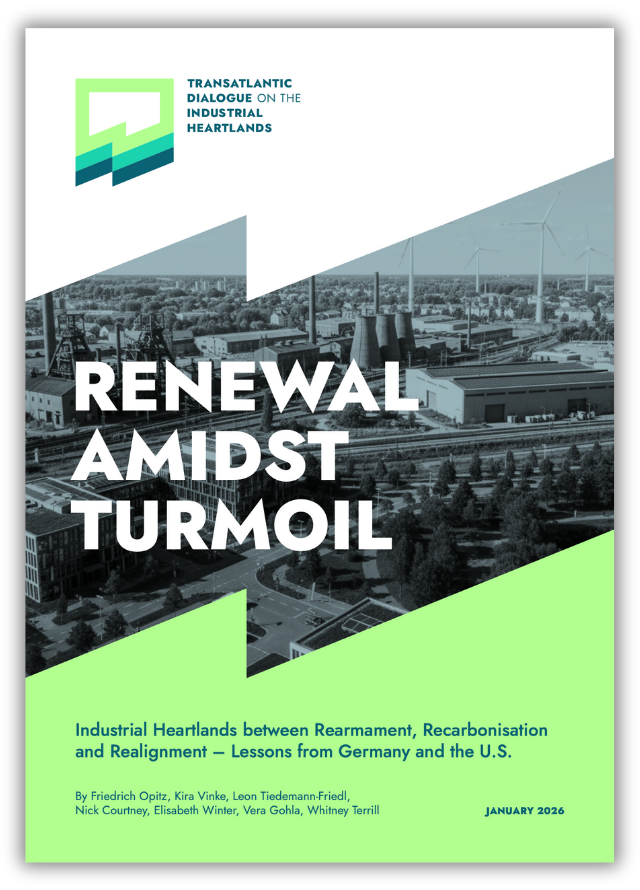
This paper examines how these regions navigate three defining dynamics of 2026: rearmament driven by Europe’s military build-up, looming recarbonisation as fossil fuel dependencies are deepened, and political realignment marked by surging populist anti-establishment movements.

We investigated how political actors communicate on TikTok and Instagram – and asked young people for their opinions.
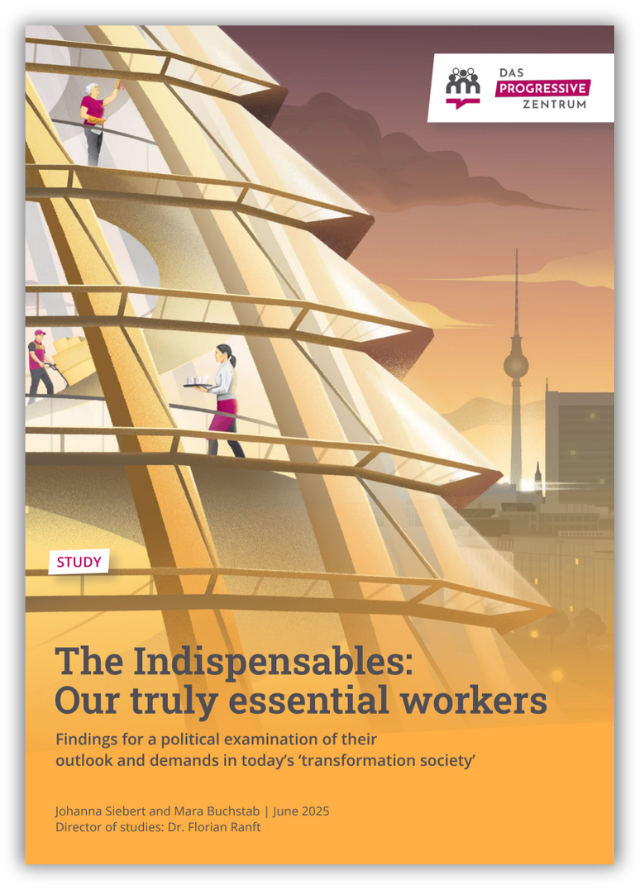
Insights for a political debate on their perspectives and demands in a society undergoing transformation

Our study examines which communication styles, topics, and tones were at the center of the 2025 federal election campaign’s hot phase on social media.
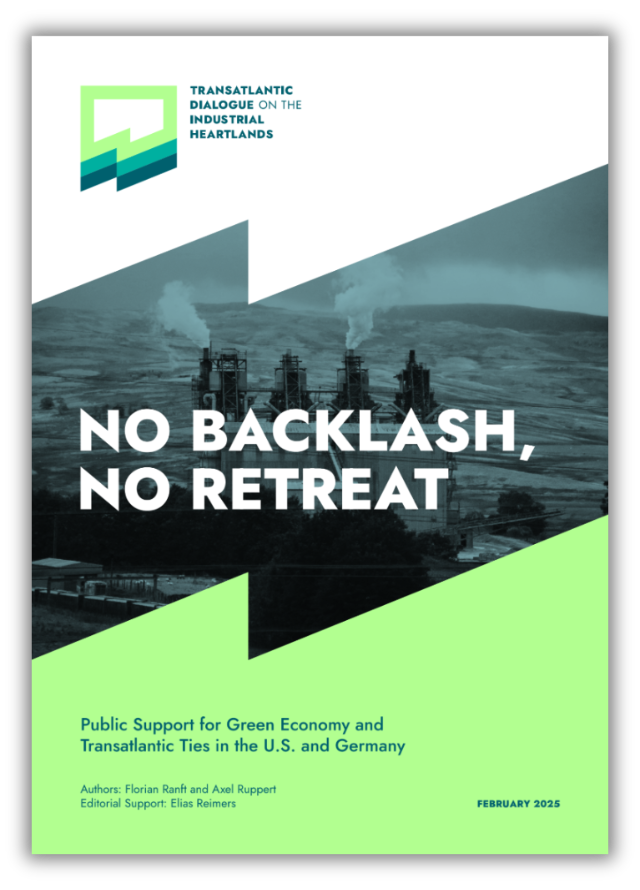
Public support for climate and economic policies remains remarkably stable in Germany and the U.S., with no significant backlash against green agendas in either country.
What do people in the industrial heartlands of the US Midwest actually think about politics? And what are the actual needs and concerns of these communities?
A week ago, Donald Trump moved into the White House for the second time, and the radical shift in US politics has already become abundantly clear. What factors drove voters in the industrial heartlands to lean Republican?
In light of the recent geo-economic shifts accelerated by the pandemic, global crises and conflicts, and the ongoing efforts to tackle the climate crisis, one group is facing particular challenges: The middle class in the former industrial heartlands across the US and Europe.
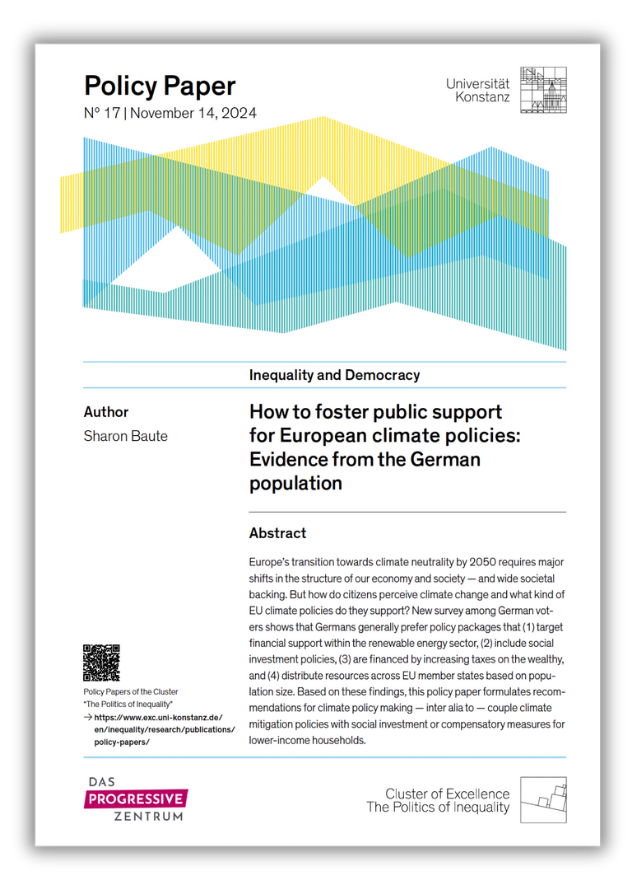
Europe’s transition towards climate neutrality by 2050 requires major shifts in the structure of our economy and society – and wide societal backing. This paper analyses what kind of EU climate policy would meet with broad social approval and formulates corresponding recommendations.