
Andreas Babler was not a central figure in the European progressive debate, but he was by no means a completely insignificant one either. In 2023, he was elected leader of the Austrian SPÖ in a somewhat chaotic, grassroots democratic process; he is a staunch leftist with a proletarian flair, and as mayor of a small town, he, at the time, earned reputation for his down-to-earth nature and the image: “Andi, one of you.” There was a certain hope that this would help restore trust among traditional social-democratic voter segments.
Babler has now announced his resignation after renitent state party chairpersons withdrew their support for him. In the end, he was unable to generate any real appeal beyond his core circle of supporters. In the National Council elections, the party received 21.1 percent of the vote—its worst result in decades. Most recently, Babler was subjected for months to a campaign of the most repugnant “character assassination” by the tabloid press, which in Austria is traditionally dominated by clan families. They wanted him out of the way since he posed a threat to their corrupt businesses. This campaign ultimately broke his back. However, it is not the sole reason for his failure.
A Successor, Against All Expectations
The broader political circumstances were not exactly favorable either: To prevent a far-right government led by FPÖ leader Herbert Kickl, a broad three-party coalition of conservatives, social democrats, and the liberal NEOS had to be formed in early 2025—a coalition that, in light of the disastrous budgetary situation it inherited, had to implement painful austerity measures. What is remarkable, however, is that the finance minister tasked with implementing these policies—Markus Marterbauer—is a staunchly left-wing economist and Keynesian, widely appreciated for his expertise and the very embodiment of integrity and reliability. Surprisingly, he became the most popular politician in the government, even though no one would have believed him to have any talent as a showman.
Markus Marterbauer is now set to take over as vice chancellor at the end of the year; he will most likely also succeed as party chairman later on. The possibility of sharing the positions with younger rising stars in the party cannot be entirely ruled out either. All of this is still somewhat up in the air, as Marterbauer is currently battling cancer, and despite an optimistic prognosis, recoveries, naturally, not always follow a politically convenient timeline. It is impossible to predict when he will be fully recovered enough to tackle such monumental tasks.
A change in personnel or a change in strategy?
The situation of the SPÖ in Austria fits the broader picture of social democratic and progressive parties across Europe, which are struggling to define their identity and navigate crisis mode. In every party, there are voices calling for a more pronounced left-wing course; others demand a more tradition-oriented combination of “economically left, culturally conservative”; and still others favor, to a greater or lesser extent, a revival of “Third Way” social liberalism—a course that used to be called “modernist” and has now a distinct 90s vibe. And since parties must always internally balance these currents, the outcome often is neither fish nor fowl. This is compounded by the fact that the Social Democrats’ fiercest rivals in cities tend to be the Greens or left-wing parties, while in rural areas and small towns it’s more extremists or populist right-wing parties—a reality that in itself forces them to walk a tightrope.
However, with the shift from Babler to Marterbauer, the Austrian Social Democratic Party did not decide to change the political strategy—but simply to swap out the individuals: replacing the hapless leftist, who ultimately lacked a bit of skill, with the leftist who enjoys the highest popularity ratings. In that sense, these events are hardly a lesson—or even a model—for what brings success and what does not.
No Patterns of Triumph or Failure
The new British Prime Minister, Andy Burnham, for example, is someone who—much like Babler—brings the down-to-earth quality of the mayor of Manchester, but represents more of a shift from an unsuccessful centrist course to a moderate leftist course with populist overtones. This became impressively clear once again during his speech at the Labour Party conference last week. Thus, he has returned to approval ratings the party hasn’t seen in years under Keir Starmer. In Brazil, meanwhile, Lula da Silva was surprisingly defeated by his far-right challenger in the first round of the presidential election and now enters the runoff as underdog. Amid the general rise of the far right, he has apparently failed to convince people that an 81-year-old who has already run seven times and served three terms should be seen as a promise for the future in a fourth term.
But searching for patterns, one must also acknowledge that neither Burnham nor Marterbauer provide evidence that a leftist course will triumph, nor do Babler and Lula provide evidence that it is bound to fail. Ultimately, it also depends on skill, personal circumstances, the individuals themselves, and contingency—that is, the random ways in which various factors and power dynamics come together in each particular situation.
With that in mind, we must hope for Andy Burnham that the stars align in his favor so he can let the full radiance of his glimmer of hope shine. That is what we wish for him and for Great Britain—and also for European progressives.
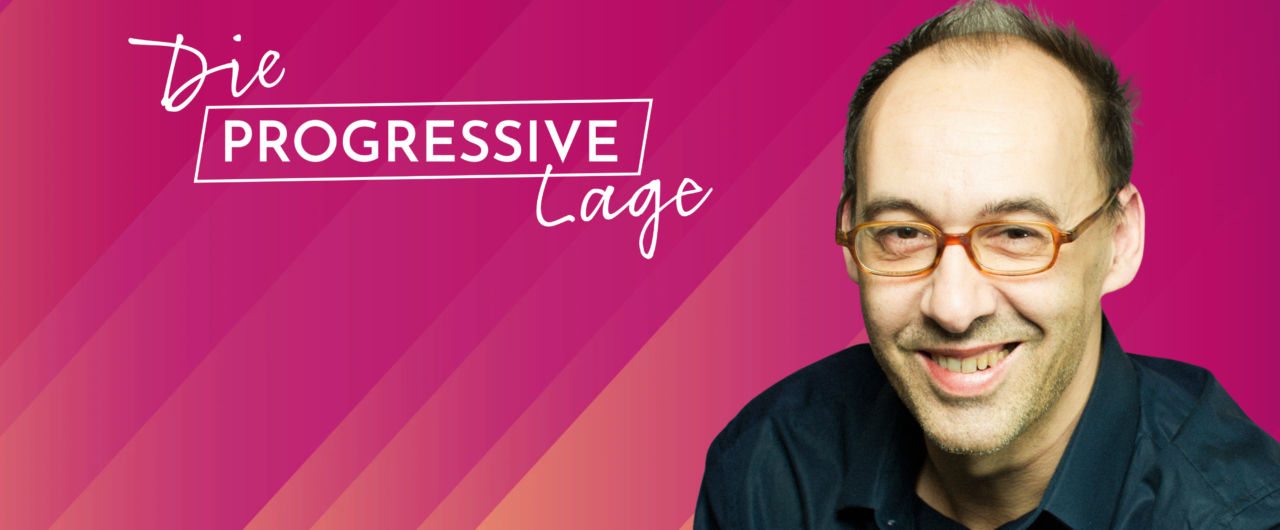
Robert Misik is an Austrian journalist and non-fiction author, and a member of the Circle of Friends of Das Progressive Zentrum. His book “Erziehung zur Grausamkeit: Die Massenpsychologie des Neuen Faschismus” was recently published by Suhrkamp.
Author

Further articles

Buried Villages, Fragile Democracies: Coal, Community, and the Unsteady Politics of the Climate Transition
How can the new special fund and the reform of the debt brake achieve optimal effectiveness?
