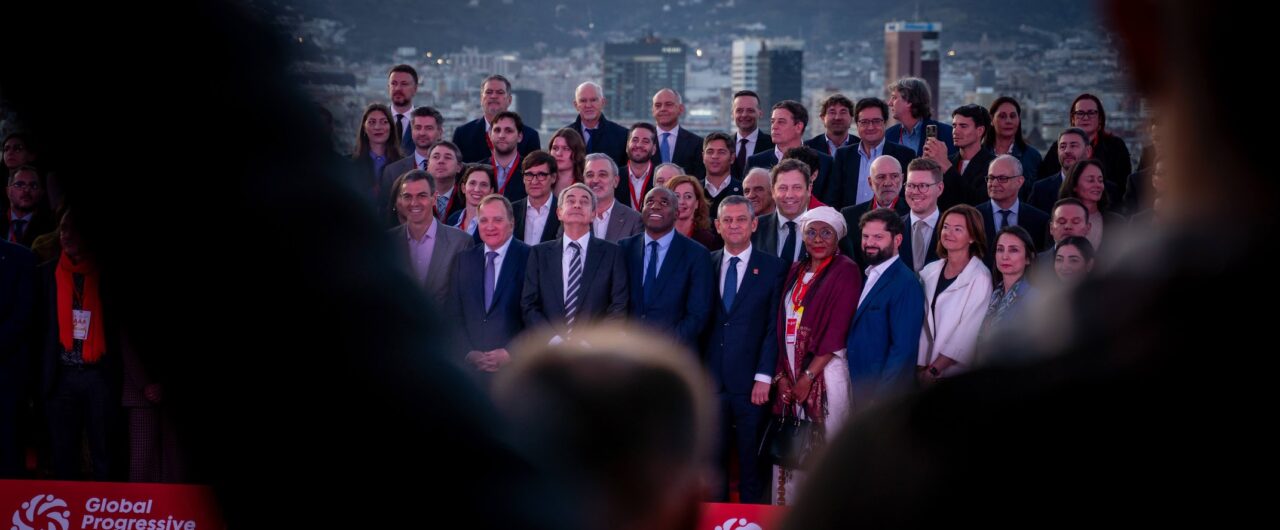
In Barcelona, heads of government and representatives of progressive parties and organisations, as well as civil society, have come together for the Global Progressive Mobilisation (GPM). The meeting was convened by Spanish Prime Minister Pedro Sánchez to reflect on the decisive challenges of our time, exchange ideas, and agree on concrete measures.
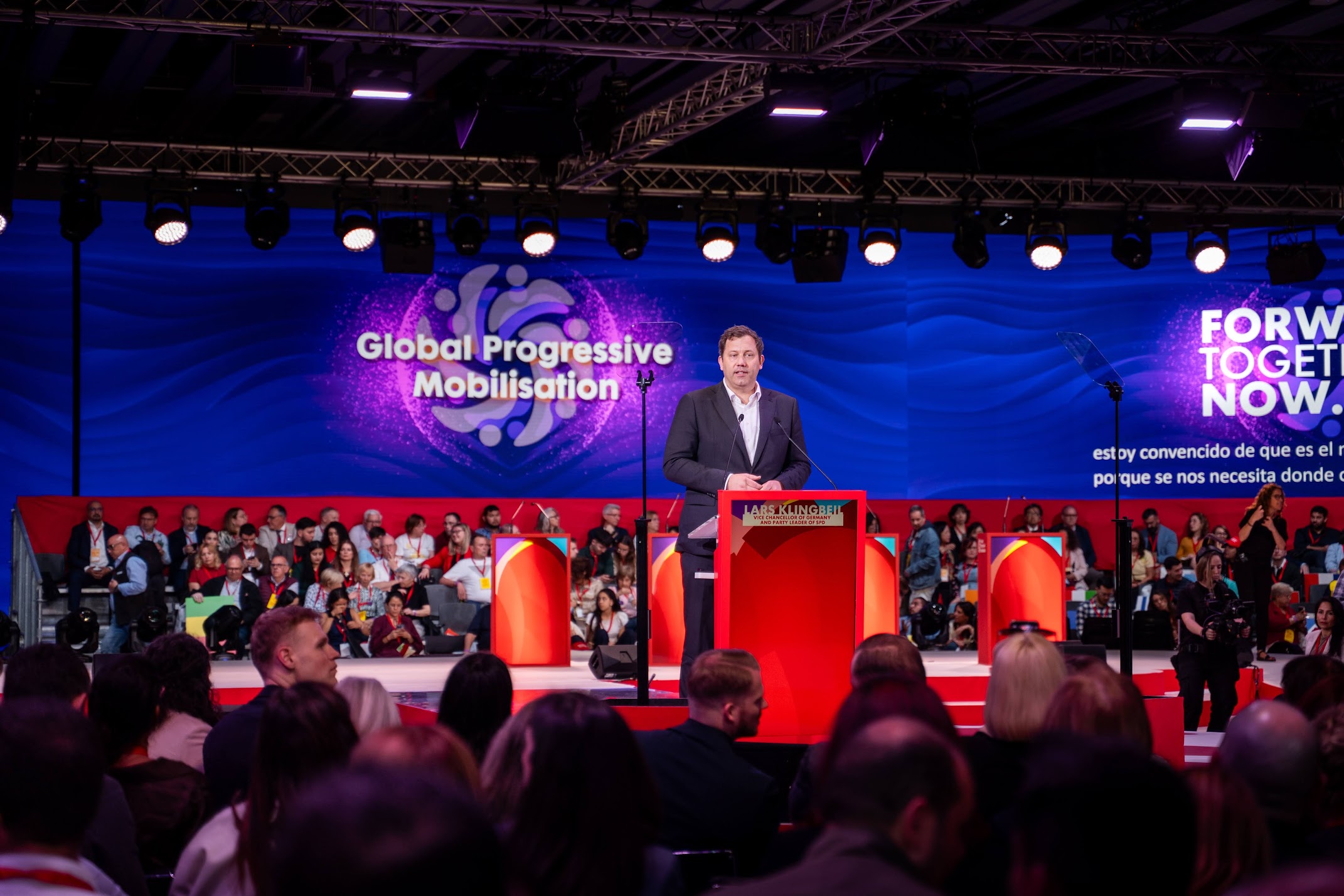
Around 5,000 national and international guests attended the conference. Among those who travelled to the event were Brazil’s President Lula da Silva and the Prime Minister of Barbados, Mia Amor Mottley. The United States was represented by former Vice-Presidential candidate and Governor of Minnesota, Tim Walz, as well as US Senator Chris Murphy. Heading the German delegation were Vice-Chancellor Lars Klingbeil and Federal Minister for Economic Cooperation and Development, Reem Alabali-Radovan.
The two-day event was organised by an alliance of progressive organisations, including the Party of European Socialists (PES), the Center for American Progress (CAP), the Foundation for European Progressive Studies (FEPS), and the Friedrich-Ebert-Stiftung (FES). Das Progressive Zentrum contributed to the content in two sessions focused on transatlantic relations and fair work.
Seizing the Momentum
The timing of the conference was favourable. The success of Peter Magyar in Hungary and the resulting removal of Viktor Orbán from office demonstrated that right-wing nationalist-populist politics is not on an unimpeded path to victory. Similarly, a look at the USA and recent internal party resistance against Donald Trump showed that the bloc of the internationally organised “New Right” is fragile.
The summit is further evidence that the international progressive debate is gaining strategic depth. It was the second meeting of its kind within barely six months. At the 2025 Global Progress Action Summit in London, newly elected, moderate-progressive heads of government such as Keir Starmer, Anthony Albanese, Jonas Gahr Støre, and Mark Carney dominated with a pragmatic political style beyond ideological trench warfare. This was combined with an attempt to establish an inclusive, common-good-oriented patriotism as an alternative to the New Right.
At the summit in Barcelona, the focus expanded significantly through strong voices from the Global South, with the defence of democracy and the fight against social inequality taking centre stage as a unified project. Furthermore, the cost of living and the refinement of a distinct international progressive project for a rules-based international order topped the agenda in many sessions and speeches. Barcelona has shown that progressive politics can once again be on the offensive internationally – bolstered not least by the growing contradictions of the opposition.
Giving Workers a Voice
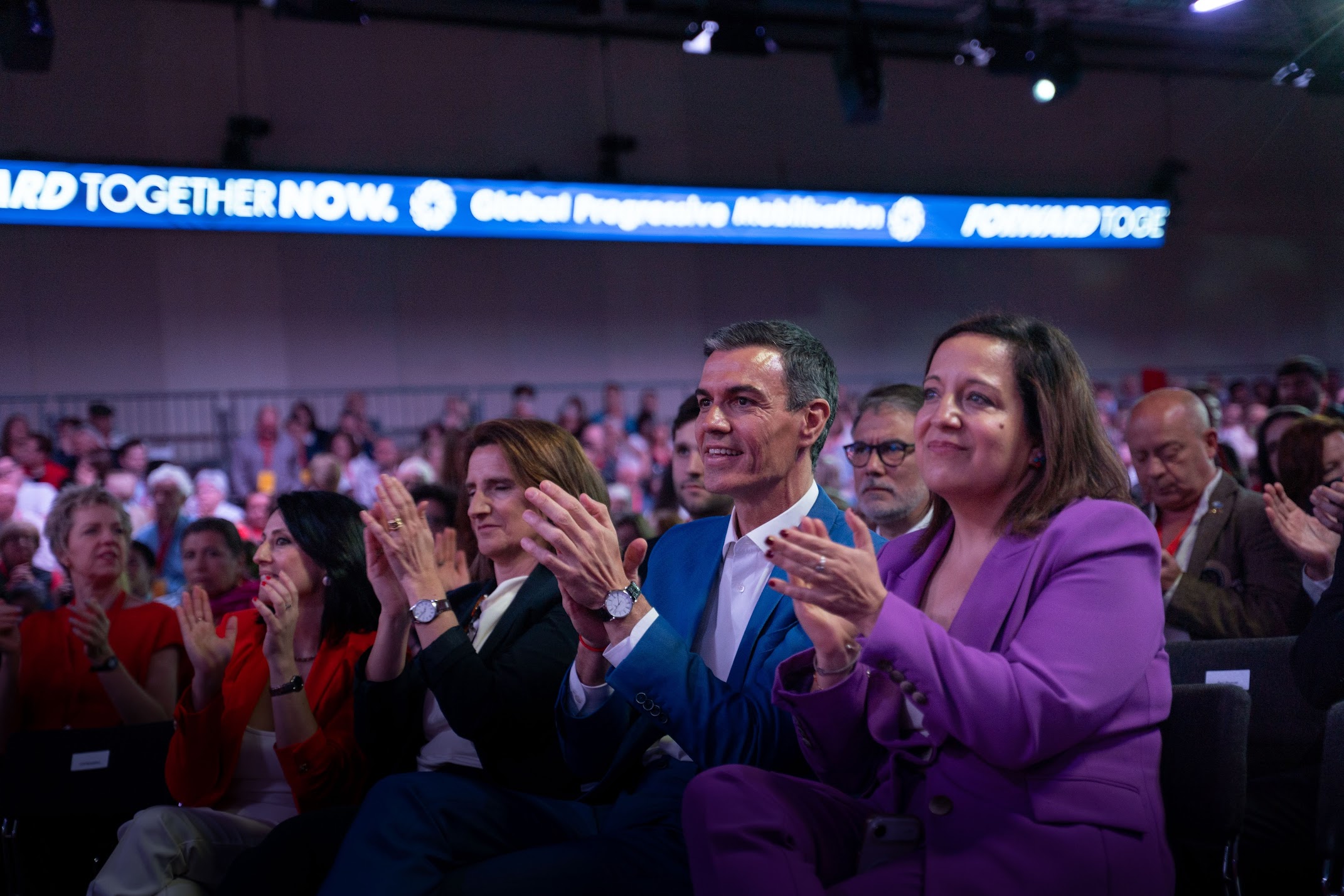
During a session hosted by the Friedrich-Ebert-Stiftung, Das Progressive Zentrum was invited to provide thematic input on social and labour market policy. Johanna Siebert presented the project on essential workers in a society in transformation.
The term “essential work” (Basisarbeit) refers to all those activities for which no formal vocational training is required. These jobs can therefore be performed without lengthy induction. They are physically demanding, often poorly paid, associated with constant insecurity, and – despite being socially vital – receive little appreciation. In Germany, this accounts for about 20 per cent of all employees. In short: these are the workers that politics must not forget. The session provided a platform for the perspectives and demands of people working in this sector.
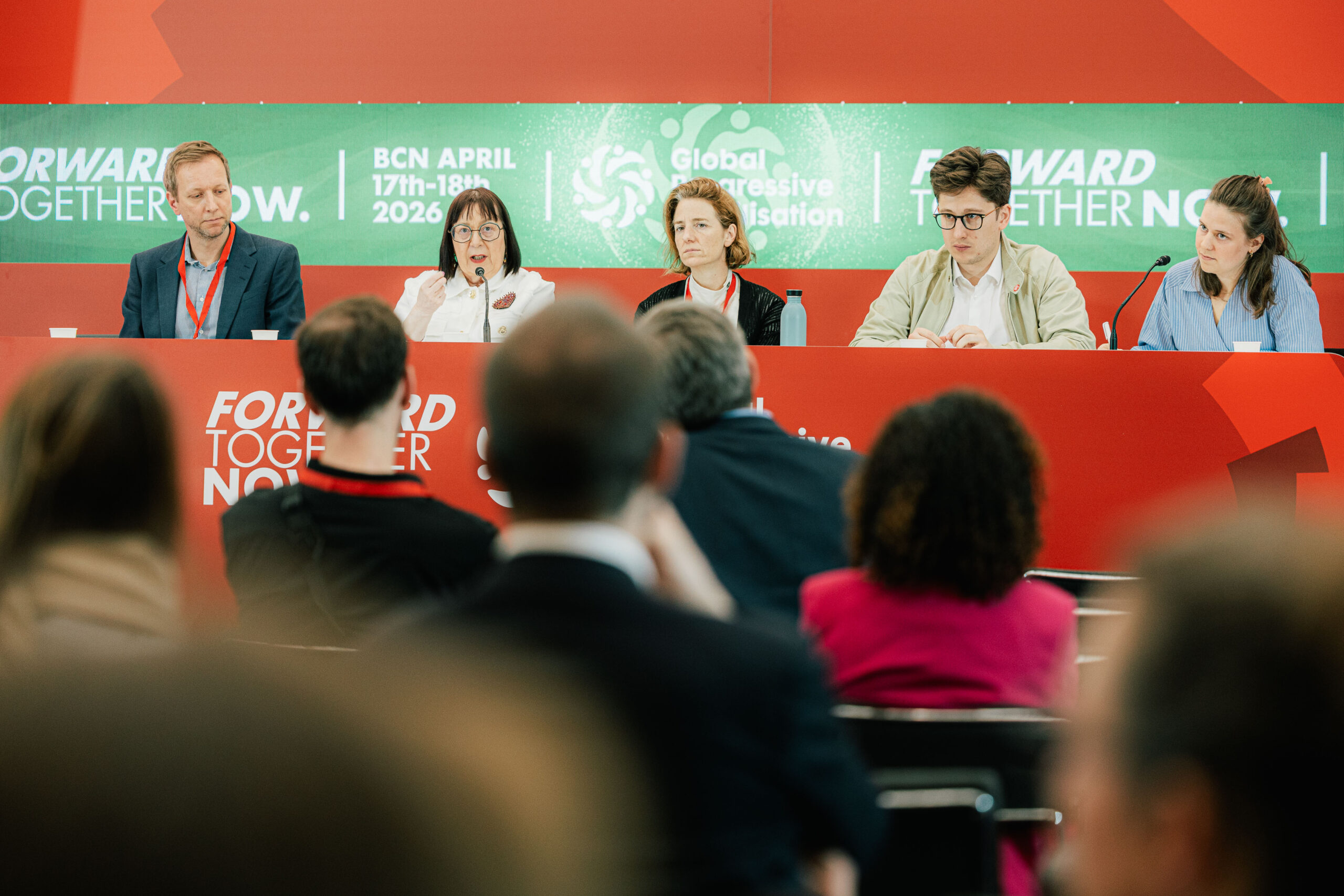
During the session, the trailer for the project film The Indispensables was screened. Following this, Philipp Türmer (Chairman of the Jusos), Konstantin Bärwaldt (FES), Esther Lynch (General Secretary of the European Trade Union Confederation), and Kate Bell (Assistant General Secretary of the Trades Union Congress) discussed the indispensable role of essential workers.
Next stop: Toronto
The Global Progressive Mobilisation in Barcelona marked the start of a long-term journey toward building lasting cooperation and shared capacities among progressive forces worldwide. Next stop: Toronto in May, where Mark Carney has invited participants to another international summit.